We make a very big deal about the 100th day of school. One thing I like to do every year is ask students to bring 100 small objects to school. I make a little bulletin board to showcase their work. Download the 100 day banner, the owl 100 day sheets, and other 100th day activities HERE!
February 22, 2015
February 12, 2015
Owl You Need is LOVE
dan-nan-nana...
Love Monster Valentines Box
1. Love Monster (book)
2. Tissue boxes (one for each student)
3. Paint
4. White card stock (teeth)
5. White circles
6. Glitter glue
7. Other decorations
I ask students to each bring in tissue boxes. I also save some from my classroom for children who do not provide one. The first day we paint out Love Monsters. Sometimes we paint a second coat in the afternoon. The second day we decorate our monsters by giving him/her eyes, legs, arms. At this point, it is up to the student to decorate. They can make their monster look however they'd like. On Valentine's Day I use the monsters to hold valentines. It's perfect because it holds all the candy and cards they get.
Donut Valentine's Day Favors
Multi-Sensory Sight Words (Valentine's Style)
In this activity, students practice spelling sight words and exploring word families. All you need is shaving cream and glitter. Simply spray shaving cream on a table and sprinkle red glitter (for the Valentine's Day effect). Ask students to spell CVC words, sight words, etc. Easily differentiated and FUN!
Find more Valentine's Day ideas HERE!
February 8, 2015
Fun with Letters!
A Fun & Engaging Way to Teach Letter Recognition and Early Phonics Skills!
I ran the crowns off on card stock paper. This made them more durable. Students decorated their hats by coloring, completing the handwriting activity, gluing pom poms, and adding jewels!I made a crown for each letter, but also uploaded a little FREEBIE so you could all check them out!
Have fun!
Download the Entire set HERE!
Download the FREE sample HERE!
February 7, 2015
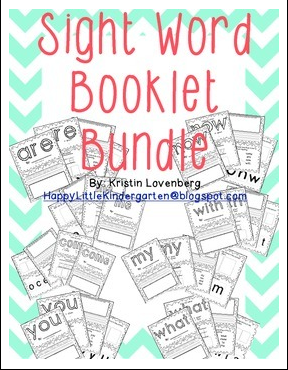
Kindergarten Sight Word Practice
Sight words are a HUGE part of any kindergarten curriculum. Every year I'm constantly looking for new ways to teach sight words. Here are a few of my favorites!
Beading Sight Words
Using pipe cleaners and letter beads are a fun way to students to review sight words while strengthening fine motor skills. Sometimes if a student is really struggling to learn a particular word, we make a sight word bracelet out of these beads and we review the word throughout the day.
I found the beads pictures at a Dollar Tree just the other day, but you can find them at any craft store. I'm still on the hunt for lowercase letter beads.
Spin and Record Games
Finding new ways to practice sight words help children learn sight words. Also, these activities make students look more critically at each word and can strengthen math skills!
Sight Word Reference Posters
Providing visual cues around the room can help students identify difficult sight words. Some examples include; the nut of 'what', the star of 'are', etc. You can download posters HERE (for free of course! :).Painting Sight Words
Every student loves to paint! In this picture, students are making sight word posters for the unit. Each unit students make a poster with each sight word and hang them up in their rooms at home! Some parents have told me that they have their child read each word before bed.
Other supplemental sight word activities:
January 27, 2015
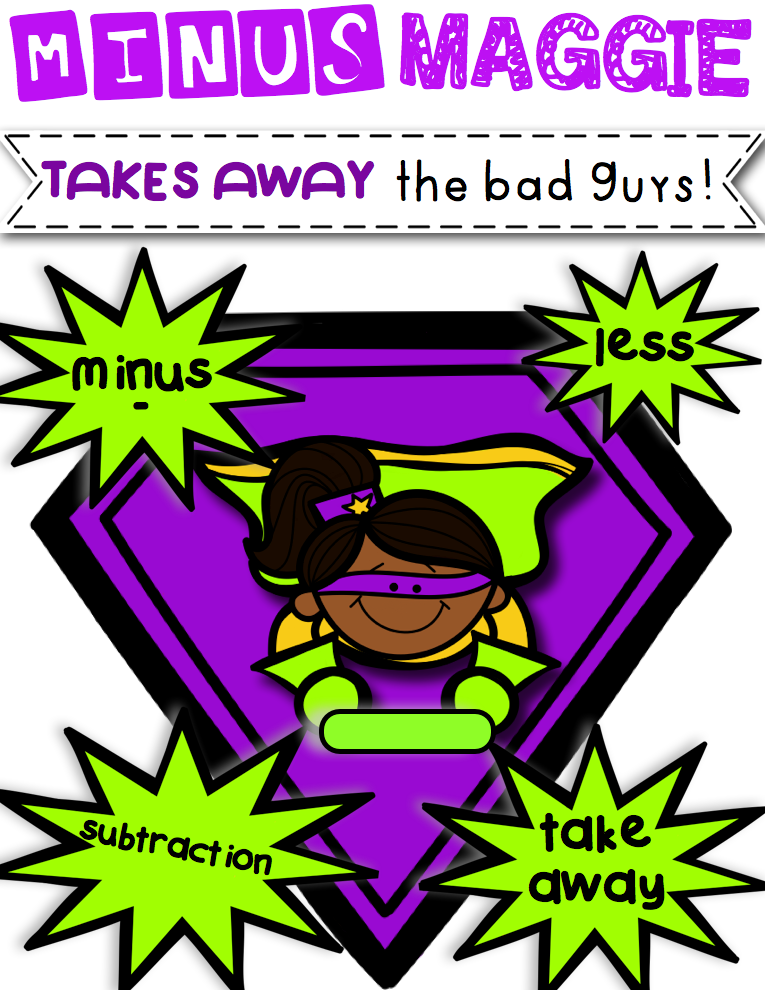
SUBTRACTION SUPERHEROS!
TAKE AWAY to 'bad guys' with this fun and interactive subtraction math center!
Many of my students have trouble differentiating between addition and subtraction so we made fun superhero anchor charts. I made special ones for my classroom and named them after my students and we even made capes to go with it! I made an anchor chart for you all to use and 2 matching subtraction centers.
Subtraction Superhero Subtraction Pack:
My Subtraction Superhero pack is perfect for any math center. I make 5 math centers each week. Students are heterogeneously grouped into 5 groups. Each group visits a new math center each day. This makes planning and preparation more manageable and allows for more time at each center. While students are working in centers, I pull students who may need a little more one-on-one assistance with a particular skill. We use engaging and unexpected materials like shaving cream to keep my group fun!I spend about 2 weeks reviewing subtraction and I made 2 independent centers for those weeks.
Subtraction Activity 1:
Students use the above cards to answer subtraction problems. They use the pictures to determine the correct answer. I provided 2 different recording sheets in order to more easily differentiate.
Subtraction Activity 2:
Cut and laminate the activity cards. Students use the prurple cards to find how many counters (or bad uys) we began with. For example, ___ - 4 = 4. Students look at the picture and count how many counters they began with. Students can use a dry erase marker to record the answer on the activity card. They are also provided with a recording sheet (shown above) to record answers. This center focuses on the beginning algebraic skills outlined in the Common Core.
January 14, 2015
December 7, 2014
Managing Guided Reading, Running Records, and Writing in a Kindergarten Classroom
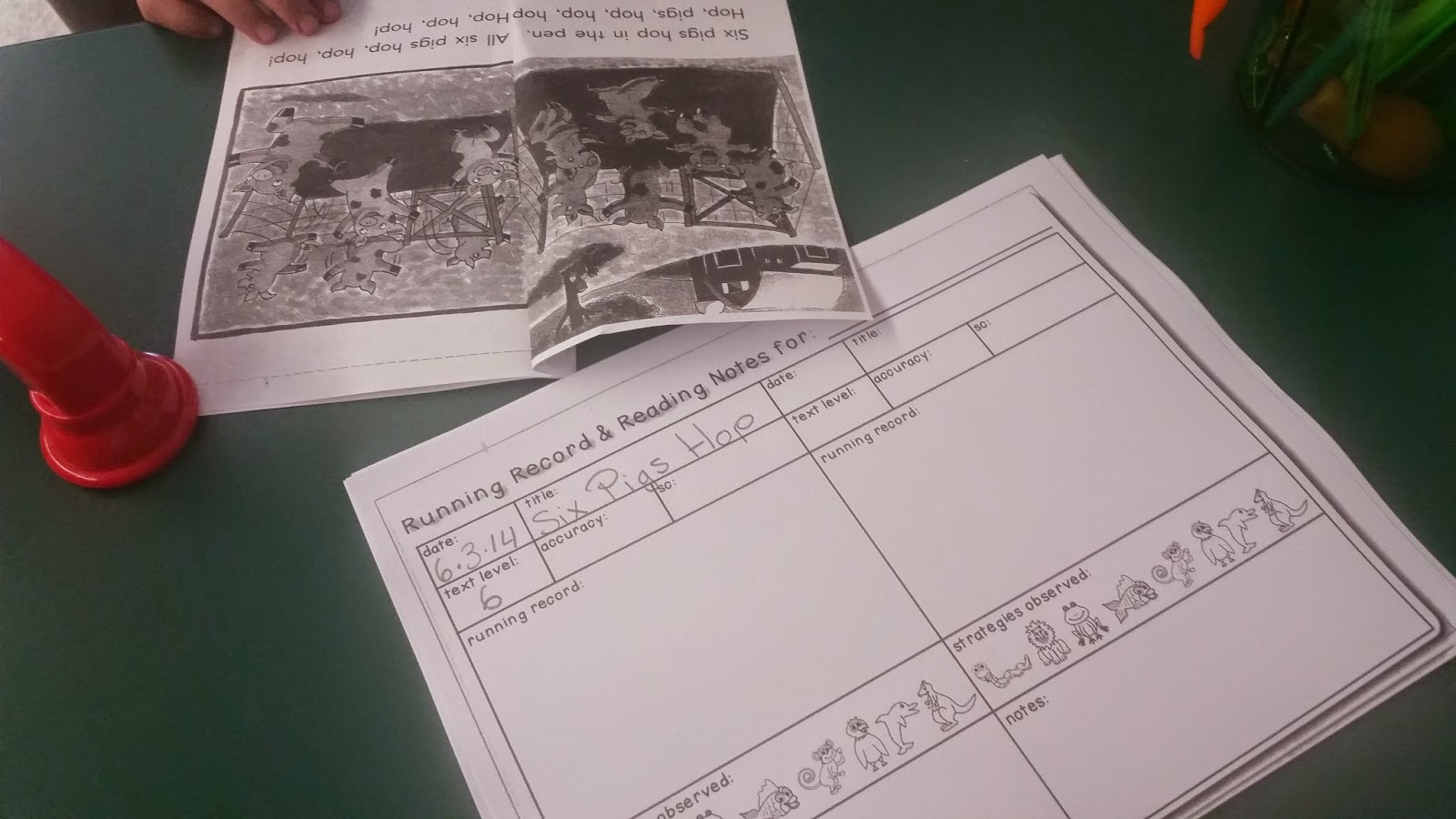
Guided reading is a HUGE part of my classroom each day. Using DRA scores to level my groups, I spend about 20 minutes with each reading group. We have recently been asked to include running records in each child's portfolio and many teachers expressed their frustration with completing these running records. I decided to explain how I manage reading, taking running records, and writing all in my 20 minute group.
Determine your focus
Find a reading strategy and comprehension strategy. I use decoding animals to teach decoding skills. Next I find my comprehension skill (details, main idea, characters, text features, etc.)
Pick an appropriate text
I use decodable texts, predictable texts or books with our sight words. I'm lucky to work in a school with a book room of leveed texts but I also like to order Bob's Books from scholastic.
Guided Reading
I begin with a mini lesson based upon the skill we are working on. I give students highlighting tape to highlight words they struggle to decode and scaffold using the decoding posters. We sometimes also use the tape to highlight sight words. Once we read the text together, I give students whisper phones to read independently then they partner read quietly. At this time, I begin my running record. I pick a student and provide the student with a text at their instructional level. While students are whisper reading, I have time to work with a student. It's important to note that you do not need running records for each student every week. I typically do them about 3 times a marking period for each child.
Respond to reading
Once I'm done with my running record We respond to our reading in writing. I do this in a variety of ways. I use pre-made response sheets or students use writing paper to draw a picture and respond by writing a sentence. Again, this depends on the skill I am teaching. You can download my FREE writing paper HERE and download my guided reading response activities HERE.
Follow Happy Little Kindergarten!
Subscribe to:
Posts (Atom)